
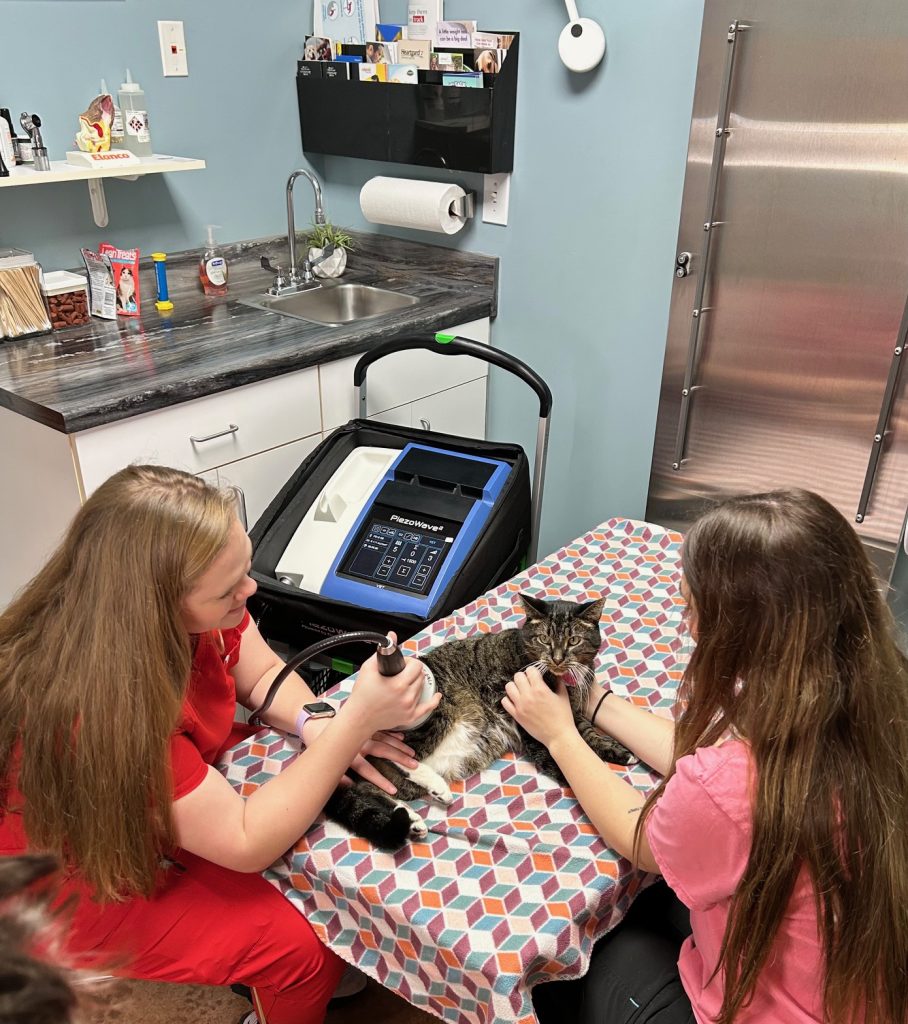
Extracorporeal Shockwave Therapy (ESWT), often referred to as simply shockwave, is a technology that is not new to medicine. In fact, human medicine has used extracorporeal shockwave lithotripsy (ESWL) for over 30 years. This form (ESWL) of shockwave is used in human medicine to break apart kidney stones using high intensity acoustic shockwaves.
ESWT was next demonstrated in multiple human studies to facilitate treatment and healing of pseudarthrosis (non-union bone fractures). Since then, it has been used to successfully treat many types of conditions like tendinitis calcarean, epicondylitis, heel spur pain and a non-surgical viable treatment of acute and chronic pain of musculoskeletal system.
Shockwave therapy began to be used in animals in the 1990’s and have been used successfully for bone, joint, and tendon injuries, as well as osteoarthritis conditions. Shockwaves are soundwaves that create an impulse when transmitted into tissue. The impulse creates a high-pressure wave followed quickly by a negative pressure wave. These waves occur repeatedly and rapidly during treatment. The shockwave impulse creates a mechanical stressor which induces biochemical changes in living tissue.
Below is a list of specifically studied effects of shockwave:
- Stimulates new blood vessel formation
- Regulates inflammation
- Releases nitrogen oxide which contributes to vasodilation, increased metabolic activity and new blood vessel formation, and exerts anti-inflammatory effect
- Changes levels of Substance P (a neuropeptide known for transmitting pain signals and regulating inflammation)
- Stimulates bone metabolism
- Releases growth factors; IGF, TGFbeta, VEGFgamma
- Exhibits chondroprotective (bone cartilage) effects
- Dissolution of calcified fibroblasts
- Stimulates lubricin production (a joint lubricating glycoprotein)
- Stimulates stem cells (needed for tissue healing)
- Antibacterial effects
Shockwave is a non-invasive procedure used to treat acute and chronic pain of the musculoskeletal system. The shockwaves are generated in the transducer and are delivered to focal areas deep inside the body. Our system uses piezoelectric shockwave for treatment. This method creates a focused shockwave that is preferred by our doctors as it is much quieter than other forms of shockwave. It creates no discomfort on skin contact or in healthy tissue. When diseased/targeted tissue is treated by shockwaves, some sensitivity and sensation will be felt by the animal. This often helps us target our treatment to the affected area. We can control the intensity and depth of the shockwave to adjust if needed for patient comfort. This method requires no sedation to perform the procedures on our patients.
Examples of conditions that are being treated with shockwave are listed below:
- Shoulder diseases (bicipital tenosynovitis, supraspinatus and infraspinatus insertional tendinopathy)
- Elbow diseases – degenerative joint disease
- Carpal diseases – degenerative joint disease, tendon/ligament injuries
- Intervertebral disc disease and lumbosacral stenosis
- Coxofemoral (hip joint) disease – degenerative joint disease, iliopsoas trigger points
- Stifle diseases – cranial cruciate ligament, patella luxation, degenerative joint disease, patella tendonitis, medial and lateral collateral ligament inflammation, long digital extensor tendonitis
- Tarsal disease – ligament injuries, Achilles tendinopathy
- Wounds
- Osteochondritis dissecans (OCD)